Ernie's Kitchen Shack
Native SonErnie’s Kitchen Shack is the South Side cafe at Forty-seventh Street and Indiana Avenue that Bigger Thomas names when Mary Dalton and Jan Erlone ask him to take them somewhere Black people eat. The visit brings the white couple into a place where Bigger is known, making the restaurant a setting for the pressure between their stated wish to cross a racial boundary and his fear of being seen crossing it. The meal becomes less a neutral outing than a public test of who can move comfortably between social worlds.
Setting and Choice
As the three travel south along Indiana Avenue, Mary asks to see how Black people live, explaining that she has visited places abroad but knows little about people who live nearby. The request gives the journey an unequal premise: Mary and Jan treat access to Bigger’s world as an experience they can choose, while Bigger has to consider how their presence will look to people who know him. When Jan asks for a place to eat, Bigger identifies Ernie’s Kitchen Shack as the only South Side establishment he knows where white people eat. The specific address, Forty-seventh Street and Indiana, turns his answer into the practical route by which the couple’s curiosity reaches a real neighborhood venue.
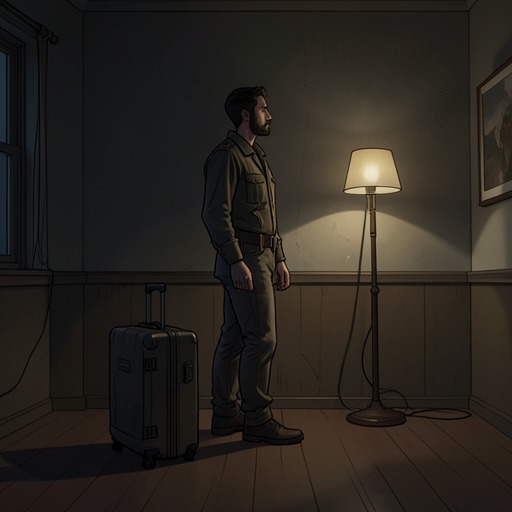
Bigger wants Jan to drive faster so they can arrive quickly. He is thinking not only of where they will eat but of his cramped, aching legs and the chance to stretch out while the others are inside. At the same time, he imagines how his friends Jack, Gus, and G.H. would tease him if they saw him riding between two white people. The restaurant is therefore anticipated as a place of exposure before the group even reaches its entrance: its importance lies in the people who may see him there as much as in the food.
Entering the Cafe
When they arrive, Bigger initially stays by the car rather than going in with Mary and Jan. The people at Ernie’s know him, and he expects them to wonder why he is keeping company with white people. Mary invites him to join them, but her friendly tone does not dissolve his unease. Jan also urges him forward, eventually catching his arm and trying to pull him toward the entrance. Bigger hangs back, then follows, confused and resentful. The movement into the cafe is a small but consequential change: he enters not because the situation feels safe to him, but because the others press the outing onward.
Inside, Jan chooses a small table near a wall, and the three sit together. When Jan addresses him, Bigger answers with the deferential form of address he has used toward white people throughout his life. He wonders how he could stop speaking that way in a single evening. The restaurant thus does not make the racial habits governing their encounter disappear; even at a place associated with Black customers, the familiar hierarchy persists in Bigger’s speech and in his effort not to meet the couple’s eyes.
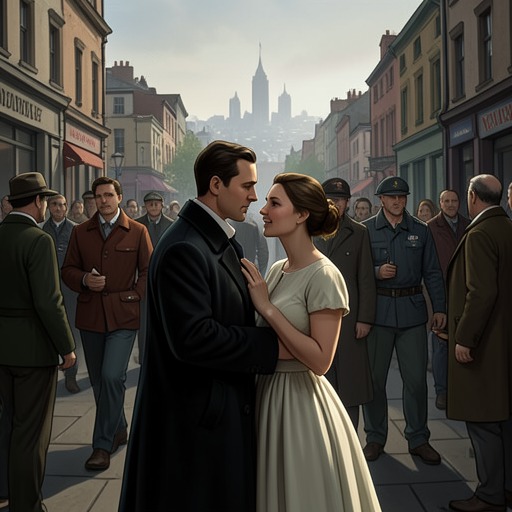
The presence of people who know him makes the meal conspicuous. Jack waves to Bigger while looking at Jan and Mary; Bigger returns the greeting with a stiff hand. Jack then walks away, and waitresses and other customers stare at the table. Their attention confirms the scrutiny Bigger had feared outside. Mary touches his arm and asks whether he has been there before, but her gesture does not change what the room has made visible: he is recognized as a local person sitting with white visitors, and neither his familiarity with the place nor their stated interest in him can make that combination ordinary.
The Meal and Its Uneasy Purpose
Jan orders three beers and three portions of fried chicken. The order establishes the group’s immediate activity, but the meal remains shaped by the difference between their expectations. For Mary and Jan, eating there accompanies a desire to encounter people whose lives they say they do not know. For Bigger, it means being watched by people whose judgments matter to him. Their outing presents interracial contact as a chosen act of discovery for the visitors, whereas Bigger experiences it as a situation with consequences for his standing among people who know him.
That imbalance also complicates the apparent friendliness of the invitation. Mary asks Bigger to join them and Jan tries to draw him into the cafe, but Bigger has already identified a risk they do not share: others may interpret his presence in ways he cannot control. The restaurant makes that gap concrete. The couple can treat the visit as a novel experience; Bigger must manage the possibility of being questioned or mocked afterward. The same table therefore holds both their intended fellowship and his apprehension about its public meaning.
Recollection and Narrative Significance
Later, during Britten’s questioning, Bigger recounts that Jan asked for a place to eat and that he supplied Ernie’s Kitchen Shack as the answer. He carefully emphasizes that Jan drove the car. Asked whether he waited outside, he says he did what he was told because he was working for the couple, and insists that he did not want to eat with them and that Jan kept pressing him to go inside. This later account echoes the earlier scene while reframing it as a defense: Bigger represents his participation as obedience to his employers rather than a freely chosen association.
The contrast between the two tellings makes the cafe important beyond the meal itself. In the scene, Bigger’s hesitation, his stiff response to Jack, and the attention from other customers disclose his discomfort through action. In the interrogation, he explains that discomfort to Britten as reluctance and pressure. Ernie’s Kitchen Shack is where the story makes the racial boundary visible at close range—not as an abstract rule, but as an encounter staged around a table, among people who recognize Bigger and notice whom he has brought with him. The visit exposes the limits of the couple’s easy assumption that curiosity and invitation are enough to make their presence uncomplicated.